
Sandy Verma
Tezzbuzz|04-10-2026
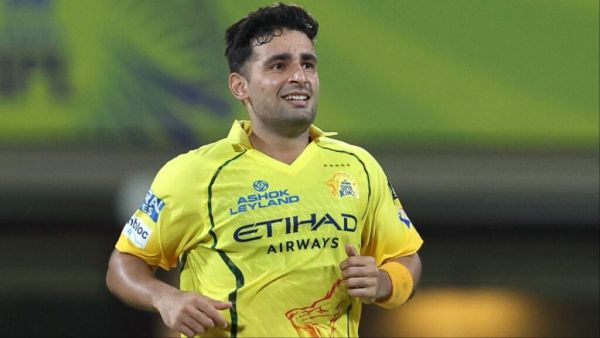
While a fast bowler's call-up to the national team is always met with unbridled celebration, as young pacer Anshul Kamboj checks into the senior team hotel in New Chandigarh ahead of the final ODI against the West Indies, the celebrations are tinged with tactical debate.
A hamstring injury to Prasidh Krishna slightly clouded India's comfortable, unassailable lead in the series. The team management called up Kamboj to replace the injured bowler after he played for India A against Australia A in Puducherry.
But with a dead rubber on the horizon and a series already in the bag, rushing in a 25-year-old uncapped ODI seamer into the setup has drawn some muted criticism.
Here are three reasons why Anshul Kamboj could be a strategic misstep

1. The Mohammed Siraj Conundrum: Missing Experience
The most obvious conundrum surrounding Kamboj's inclusion is the curious case of Mohammed Siraj.
Already in the squad, Siraj had been sitting on the sidelines as Prasidh Krishna led the attack in the first two matches. Now with Krishna out injured, it makes far more sense to include an experienced international pacer with 50 ODIs and 76 wickets to his name than to risk sending in an untested debutant, who has yet to truly prove himself in one-day cricket.
With a West Indian batting line-up that has just put on a show of a century and a half, the inclusion of yet another rookie pace bowler with the likes of Auqib Nabi and Gurnoor Brar, could do more harm than good.
2. Rhythm and Abrupt Transitions
For a fast bowler, rhythm is everything, something Kamboj has had very little of when it comes to preparation for international one-day cricket.
Having been called up while in the midst of a four-day red-ball match against Australia A, Kamboj had bowled 17.3 overs in the first innings, taking 3/43 before being asked to return for two further overs in the second. He then promptly went back to New Chandigarh to prepare for his first taste of white-ball cricket at international level.
Removing someone from the middle of a county-style red-ball match and asking them to prepare for white-ball is asking for a disjointed performance. With no List-A experience for the senior team under his belt, throwing Kamboj into the deep end with little white-ball-specific preparation for a single dead-rubber match is a gamble that could easily backfire.
3. Skill Set Mismatch
With the loss of a strike bowler in Prasidh Krishna, there is a need to replace him with another of a similar skill-set, to maintain the balance of the attack.
Krishna's strength is primarily his height and bounce, which extract awkward bounce and extra pace from the pitch, giving the batsmen little time to react. Kamboj is a classic medium-pacer; his game is built primarily upon accuracy, seam and swing. A skill-set that has served him well in red-ball cricket, but will likely leave him exposed when bowling on the flatter surfaces used in limited-overs cricket.
When the West Indies scored over 400 from their innings, it was on these very surfaces, which means a bowler who primarily bowls yorkers will struggle against a strong lower order.
Conclusion
With an assured series win under their belt, the final match provided either an opportunity to blood new faces into the white-ball setup, or reward an experienced campaigner with a start. By forcing Kamboj into action after removing him from a red-ball match, the selectors are walking a fine line between rewarding experience and ruining an exciting prospect's game.



Why Hardik is very important for India in 2027 World Cup, Ganguly told
Ex-India star predicts Ajit Agarkar’s regret as Rohit Sharma silences doubters

'Agarkar Will Now Be Regretting': Rohit Sharma's Century Draws Big Remark From Ex-India Cricketer

Herschelle Gibbs Unimpressed By Rohit Sharma's Century Celebration, Labels It A 'Stinker'