
Prateek Thakur
abplive|16-10-2026
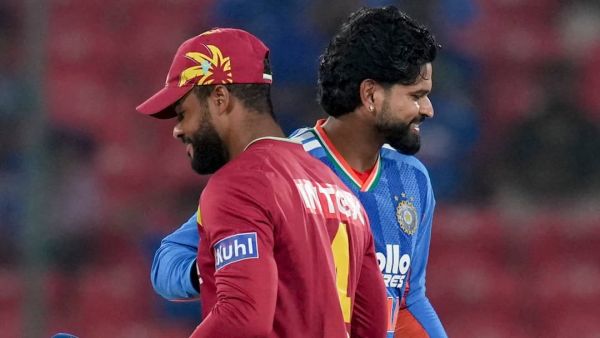
India's ongoing white-ball series against West Indies could generate between US$20 million and US$30 million (approximately Rs 189 crore to Rs 285 crore), according to Cricket West Indies (CWI) chief executive Chris Dehring. However, he claims the visiting board will receive no direct revenue from the series under the existing bilateral cricket model. Dehring has traced the problem to a decision taken by the International Cricket Council (ICC) in 1997, which he believes weakened the financial foundations of Caribbean cricket.
Why West Indies Get No Direct Revenue From India's Home Series
Speaking on Wisden's The Scoop, Dehring questioned a system under which the host board retains the revenue generated by its bilateral series, including broadcasting income.
Since the ongoing matches are being played in India, he said West Indies would not receive a share of the series' estimated commercial returns."West Indies cricket receives nothing in this case, because the series is being played in India," Dehring said, describing the financial arrangement as a major problem for smaller cricket boards.
He argued that the current structure creates a substantial imbalance between countries with large domestic audiences and those with smaller markets.
India can generate significant commercial returns from its enormous cricket-following population, while Caribbean boards have a much smaller audience base from which to earn revenue.Dehring also pointed to the difference between the current system and the arrangement that existed before 1997. At the time, touring teams could receive guaranteed fees for visiting another country, which he said sometimes made touring more profitable for West Indies than hosting matches at home.
The 1997 ICC Decision That Dehring Blames
Dehring recalled that the ICC's financial model was changed in 1997 after a vote in which, according to him, West Indies was outnumbered nine to one.
Under the revised arrangement, host boards could retain the revenue generated from their bilateral series rather than sharing it with visiting teams in the way they previously had.He believes the decision removed a crucial source of income for Caribbean cricket. West Indies had once been one of the most sought-after touring teams, but Dehring said the change undermined the financial benefits the board could earn from playing overseas.
"It was palpably unfair. We were outvoted nine to one by the ICC member countries," he said, arguing that the decision had long-term consequences for the region's cricketing finances.
His criticism comes as CWI faces continuing financial pressures, including player dissatisfaction over remuneration and the recent announcement of pay cuts and shorter contracts. Financial uncertainty has also added to concerns about players prioritising lucrative franchise T20 competitions over international cricket.
India's ICC Revenue Share Adds To The Debate
The debate over bilateral series revenue is separate from the ICC's distribution of central revenues to its member boards.
Under the current distribution structure cited in reports, India receives the largest share, at a little over 38 per cent, while West Indies receives approximately 5 per cent.These ICC allocations are distinct from the revenue generated by an individual bilateral series. Dehring's central complaint is that West Indies receives no direct share of the estimated earnings from the ongoing India-hosted series, rather than that the board receives no money from cricket overall.
Former CWI president Dave Cameron has also expressed frustration with the existing financial structure. The wider debate centres on whether the current model provides enough support to boards operating in smaller markets and how international cricket can remain financially sustainable beyond its biggest commercial centres.
West Indies are scheduled to face India in the fifth and final T20I in Bengaluru on Saturday, with the series level at 2-2. While the teams prepare for the decider, Dehring's comments have brought the economics of bilateral cricket back into focus
T Natarajan Returns to SRH After Delhi Capitals Trade Ahead of IPL 2027
BCCI keen to include Harshit Rana in India's ODI and Test squads for New Zealand series – Report

Rohit Sharma's 5th T20I century and two super overs: A look at what happened when India last played in Bengaluru as IND vs WI set for series decider at Chinnaswamy

Indian sports wrap, October 15: Fourth edition of IIS Sangai Cup to be held between October 16-18