
Samira Vishwas
Tezzbuzz|17-10-2026
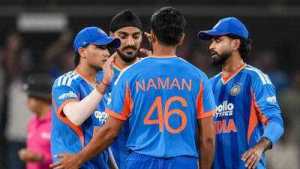
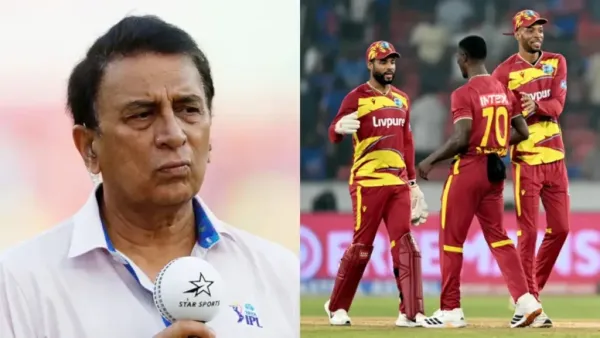
Even though Team India had to face defeat in the fourth T20 match between India and West Indies, an incident that happened in the last over of the match sparked a new debate. The defeat of the Indian team seemed almost certain. In the last over, 35 runs were needed to win and India had only one wicket left. Arshdeep Singh was present at the crease, while the responsibility of bowling was with Shemar Joseph of West Indies. During this time, Joseph continuously bowled short and fast balls against Arshdeep. Seeing this, former Indian captain and veteran cricket expert Sunil Gavaskar looked angry during his remarks. He started a debate about the sportsmanship of West Indies by questioning the style of bowling of Joseph.
Actually, in this match, West Indies, batting first, had set a huge target of 248 runs with the help of captain Shay Hope's brilliant century. In reply, the Indian batsmen tried their best to reach the target, but Team India could only score 223 runs. India needed 35 runs in the last over to win. Arshdeep Singh hit a four on the first ball of Shemar Joseph, but the fast and short ball thrown on the third ball went straight to his left hand i.e. the bowling hand. After the injury, Arshdeep appeared to be in pain and the game had to be stopped for some time. The Indian captain was also seen worrying about him, but Arshdeep refused to leave the field and got ready to bat again. Despite this, Joseph bowled the next ball also short and fast. This time Arshdeep went ahead and tried to play a big shot, but the ball passed near his bat and body. The umpire declared it wide and India got four extra runs.
Sunil Gavaskar, commenting on this entire incident, said, “He is targeting him. Why attack the batsman when the stumps are there?” After Gavaskar's comment, questions started being raised that when West Indies' victory was almost certain, then what was the need to continuously bowl dangerous short balls against Arshdeep. However, this type of bowling is a legitimate tactic in cricket and using it is not in itself against the rules. But when a batsman gets injured and the outcome of the match is almost certain, it is natural for the bowler's decision to be discussed. Gavaskar's comment is being seen in this context. This incident has once again sparked a debate about sportsmanship in cricket, player safety and the responsibility of taking right decisions on the field.






Big announcement in India-Zimbabwe T20 series, free entry for women in Raipur
After applause, Mohammad Kaif calls out Gautam Gambhir for comprising India’s bowling unit
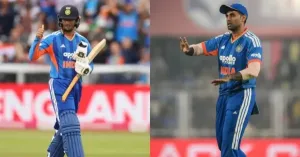
IND vs WI: Abhishek Sharma breaks Suryakumar Yadav’s special record in T20Is

Smriti Mandhana On Verge Of History, Targets Record Beyond Virat And Rohit