

Samira Vishwas
Tezzbuzz|24-10-2026
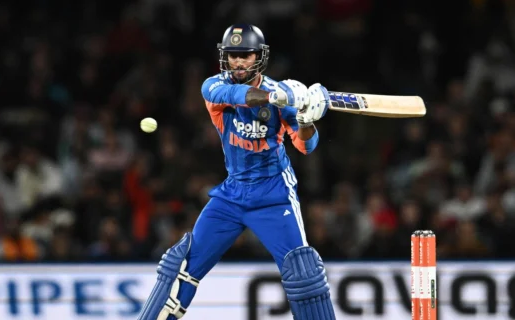
Chasing 181 in the 2nd T20I against New Zealand at Christchurch on Saturday, India were stuttering at 135/6 after the 17th over. They still needed 46 runs off 18 balls. Timing the ball had been difficult for the batters, and Tilak Varma’s stay, yielding 17 runs off 13 balls, was an illustration of how difficult things were.
New Zealand skipper Mitchell Santner had orchestrated things brilliantly until then. He himself ran through the Indian line-up with figures of 4/21 in four overs, while the support cast did enough around him to make life difficult for the visitors.
Until Tilak did what he does best: provide a top-notch finish under pressure. India’s middle-order batter scored 34 runs off the next 13 deliveries and remained unbeaten on 51 off 26 balls, taking his team home. The highlight of the knock was how judiciously he distributed his risks.
The T20I World Cup winners opted to field after winning the toss, and things were going in their favour as they had the hosts reeling at 41/3. Then Glenn Phillips (70 off 43) and Bevon Jacobs (58 off 46) got together, stitching a partnership of 116 runs off 77 balls.
This helped New Zealand post a competitive total of 180 runs.India got off to a steady start, putting 40 runs on the board in 4.3 overs without losing a wicket. However, they began to lose momentum after this. In a span of six overs, India added just 29 runs and lost four wickets, reaching 69/4 in 10.3 overs when Tilak arrived at the crease. Soon, they lost Axar Patel and were reeling at 70/5.
Naman Dhir provided the initial momentum in the chase, scoring 31 runs off 17 balls, but Santner accounted for him, and India were staring at defeat at 112/6 in 14.5 overs.
Santner had spun a web around the Indian batters, with excellent support from Michael Bracewell.The Kiwi spinners conceded just 56 runs in their combined eight overs while taking four wickets. The New Zealand captain read the pitch astutely. He was flighting the ball, varying his pace, and shot-making was becoming increasingly difficult.
Tilak saw wickets fall at the other end and spinners control the game. Shreyas Iyer and Axar Patel fell trying to hit out.
However, Tilak curbed his instincts and waited for his opportunity.The runs between boundaries
While the boundaries at exactly the right moments will make the headlines, it was the strike rotation that gave substance to Tilak’s knock. Of his 26 balls, only four were dots, a dot-ball percentage of just 15.38%. Dhir played six dots in his 17 balls, a dot-ball percentage of 35.29%. The roles of the two batters were different, but this shows Tilak’s ability to keep the scoreboard ticking, which in turn made the boundaries Dhir struck more valuable. Even before Dhir’s arrival, Tilak ensured India did not let go of precious deliveries even if boundaries were not coming.
Dhir’s aggressive batting allowed Tilak the room to get into rhythm. India’s tight position meant they needed someone to score off the spinners. Dhir took the risks. He smashed Santner for a six over long-off and then took 13 runs off four deliveries from Bracewell. This brought down the asking rate. However, he fell trying to play an inside-out shot against Santner.
Waiting for the right bowlers
Tilak looked assured of his abilities. At the post-match ceremony, he said, “I wanted to take the game as deep as possible.” In the first match, Tilak scored only six off 11 balls, all against spinners, with five of those deliveries being dots. In this match, he survived the early phase and waited for the bowlers he preferred.
That his scoring rate jumped from 130.77 in the first 13 deliveries to 261.54 in the next 13 shows how he executed his plans. India entered the 19th over needing 29 runs off 12 balls; Varma hit three boundaries and a six against Nathan Smith, tilting the balance in India’s favour. The set of six deliveries showcased his range. The first boundary came through the third-man, followed by one through midwicket. He then played a pull behind square and topped it off with a six wide of long-off. He made setting fields against him a challenge.
In 2026, Tilak Varma has scored 470 runs off 203 balls at a strike rate of 231.52 between overs 16 and 20. It is the highest strike rate among 105 batters who have faced at least 75 deliveries in this phase. India’s flourishing talent at the top has forced Tilak to evolve from a middle-order stabiliser into a middle-order finisher. And so far, the numbers suggest he has taken to the role like fish to water.
The absence of pacer Matt Henry in the death phase can be a mitigating factor for New Zealand. However, nothing can diminish Tilak’s effort. When he arrived at the crease, the chase was threatening to slip out of India’s grasp. But his temperament, composure and resolve saw them through to a 2-0 lead in the five-match series.






‘He didn’t look ready’ – RCB coach makes candid admission about Bhuvneshwar Kumar’s below-par performance in first T20I vs NZ

Five ducks, 113 all out! India A batters suffer horror show against New Zealand A

Why Vaibhav Sooryavanshi Should Open for India in 2nd T20I Against New Zealand

India's workload dilemma: Why senior players reportedly refused rest for West Indies T20Is