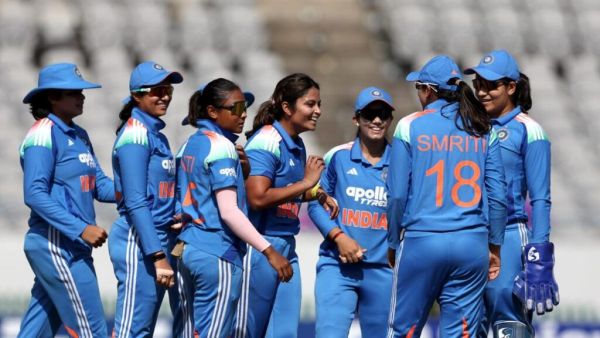
Amol Muzumdar had a wide smile on his face after India completed a clinical eight-wicket win on Wednesday to bring the curtains down on a white-ball series against Zimbabwe. A 6-0 sweep is a resounding indictment of dominance with most of the first team consistently in action across fixtures in Raipur and Vadodara.
“One, to give an opportunity to the youngsters, and the second was domination. We spoke about it in team meetings – that we would dominate whenever we got a chance,” he told the official broadcaster after the third fixture.
The Lady Chevrons are an emerging side, one that is still finding its feet in its own systems, so perhaps this might not be the assignment to truly gauge and applaud improvements in technical and tactical spheres but it will be a shot in the arm for a transitioning side ahead of a crucial, and more challenging tour of South Africa coming in December and then the inaugural Women’s Champions Trophy early next year at home.
ALSO READ | “Lord, one more wicket”— Vaishnavi Sharma’s hunger to be counted
That said, the Women in Red gave India plenty of food for thought. Here are some takeaways from the ODI leg of the series in Vadodara:
Why is fielding still India’s bugbear?
India’s fielding standards have been a cause for concern for a while, certainly for the entirety of Muzumdar’s tenure thus far. In the ODI series, unforgiving heat added another level of difficulty to a challenging format, with players sapped out particularly when fielding in the afternoon.
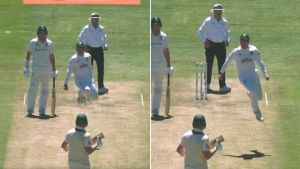
Considering just dropped catches, misfields, missed stumpings and missed assists for run outs, India registered 26 fielding errors to Zimbabwe’s 22 according to CricViz data.
This despite India being the fitter and more well-adjusted side to the format and conditions. The numbers are even more skewed in the T20Is, with India making 18 errors, more than double of Zimbabwe’s seven.“We’re very proud we’ve outfielded India and by a fair mile,” Zimbabwe coach Mark Coles told Sports stars.
The catches that went down particularly were straightforward chances.
Fielding coach Munish Bali has much to ponder about in how India sharpens itself in this department. Even at the nets, one sees very simplistic drills for the Indian side that doesn’t entirely improve on anticipation, specifically before a game.
The camp the national side is set to have before they head to South Africa, a world-class fielding side, will be key.Seamers lack bite?
Smriti Mandhana was clear about backing her seam pool for this series. Nandni Sharma, who took six wickets and was clinical in the T20Is, did not feature in the 50-over fixtures and is yet to make her ODI debut. Given India’s openness to experiment, the logical conclusion, seeing her knee was in a compression brace during sessions with the strength and conditioning coach, points to a niggle or at the very least workload management.
Jintimani Kalita returned just one wicket from the three games she played against Zimbabwe.
| Photo Credit:
BCCI/X
Jintimani Kalita returned just one wicket from the three games she played against Zimbabwe.
| Photo Credit:
BCCI/X
In her absence, India backed debutant Jintimani Kalita, Kranti Gaud and Sayali Satghare against Zimbabwe. Sayali took a few games to find her rhythm, truly settling into the format and conditions only in the third fixture. Both Sayali and Kranti were erratic with their line and length for the first two games.
But the bigger issue, perhaps, is the absence of sustained pressure and wickets in the PowerPlay. India managed to take two and three wickets each in the first 10 overs of the first and third ODI respectively, but in the second game, while India triggered a dismissal in the ninth over, the next came only in the 23rd.
The domestic women’s age group and senior fixtures have begun and all eyes are on India’s pace allrounders like Kashvee Gautam and Amanjot Kaur. That they bring an extra zing with the bat is a bonus the side has not had to miss against Zimbabwe but might against its African neighbour.
Harmanpreet finds form
With a monstrous 41-ball 91 in the 3rd T20I and a fluent 121-ball 126 in the second ODI, finding form is going to come as a big relief for former India captain Harmanpreet Kaur and, by extension, India. She occupies a crucial spot in the batting order which was locked with captaincy. Now at the mercy of performance, Harmanpreet’s fluency in this series will give her confidence. But much like Smriti Mandhana’s comfort with demoting herself to give the experimental picks batting time, this too, needs to be viewed within the realities of the relative weakness Zimbabwe’s bowling lineup had.
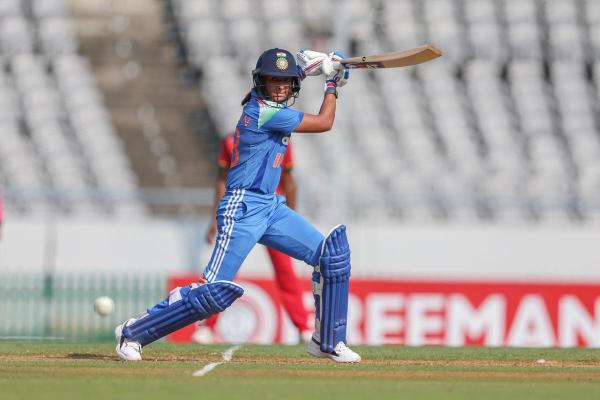
Harmanpreet struck her eighth ODI hundred in the second game.
| Photo Credit:
BCCI/X
Harmanpreet struck her eighth ODI hundred in the second game.
| Photo Credit:
BCCI/X
The bigger challenges and tougher opponents await and, given how sweetly she has been timing the ball and the ability she has to turn the script on its head when she settles, particularly in the shortest format, India will want this patch of runs to go on for as long as possible.
Problem of plenty
India has what it has wanted for years now. While injuries mar the pace department, there is surplus everywhere else which India now has the happy headache of worrying about. What happens to the No. 3 slot when Jemimah Rodrigues is fit for selection? Should Amanjot and Kashvee be fit for South Africa, will they be slotted in immediately? Who will India prefer among left-arm spinners Vaishnavi Sharma and N. Sree Charani? Yastika Bhatia was a revelation behind the stumps but did not use the opportunity handed to her with the bat to make an impression in the lone chance she was given. Given Richa Ghosh’s inconsistencies with the bat and mounting errors with the keeping gloves, is it time to give Yastika an extended run in ODIs?
Smriti and Muzumdar have an unenviable job at hand.
Published on Oct 29, 2026