Samira Vishwas
Tezzbuzz|02-11-2026
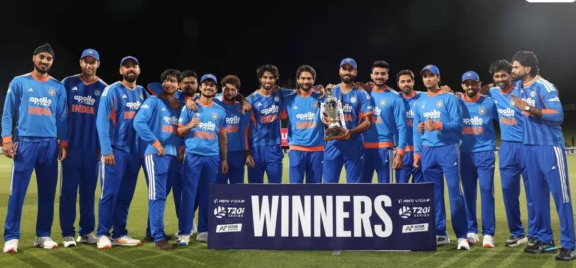
India returned with a 3-2 series win over New Zealand in the T20Is. The result appears convincing; however, the fact that they won the first three matches before losing the last two makes the finish look a bit gloomy.
New Zealand’s 87-run win in Auckland and seven-wicket victory in Hamilton exposed some of India’s weaknesses. India’s batting firepower mostly carried them in the series, while profligate bowling returns and unreliable fielding cost them on several occasions.
Chase masters
The extraordinary ability to chase targets shone through for the Men in Blue. In the first match, they chased down 226 runs in 19.4 overs, winning the match by four wickets. In the second match, they chased down 181 in 19.5 overs, winning the match once more by four wickets.
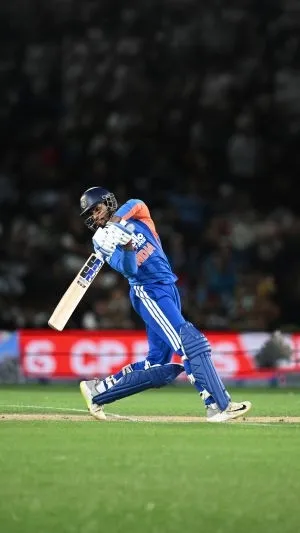
The third match of the series saw the most explosive batting show from the visitors. They chased down 199 runs in just 13.2 overs, as Abhishek Sharma teed off, scoring 113 runs off just 38 deliveries. Vaibhav Sooryavanshi, who got limited opportunities in the series, scored 45 runs off 19 deliveries and helped set up India’s chase, stitching together a 133-run opening partnership in just 7.1 overs.
Shreyas Iye r’s men recorded the second-fastest chase of 190 or more in men’s T20I cricket (by balls remaining) during the third match. After two narrow wins in the opening two matches, India were at their imperious best in Wellington.
Not only the top order, but India found valuable contributions lower down the order too. Naman Dhir used the opportunities brilliantly to establish himself as a formidable finishing option. In the five innings that Dhir batted in, he scored 138 runs at a strike rate of 200. His unbeaten 42 off 15 balls in the opening match came in a crucial chase and took India across the line.
The Indian middle order brought out the best in themselves during the second match under pressure. Tilak Varma led the chase after India collapsed to 70/5 while chasing 181. He scored 51 off 26, while Naman Dhir set the stage for the finishing burst with a brilliant 31 off 17.
Nitish Kumar Reddy played the supporting role, scoring 26 off 13 balls as India secured the win with one ball remaining. The three matches demonstrated that while the Indian top order can take the game away from the opposition in a chase with their explosive display, the middle order can also deliver under pressure.
After the series, India have a selection dilemma. While there have been some brilliant batting shows, they are still struggling to find their most effective top-order combination. Abhishek Sharma scored 197 runs in the series at a strike rate of 223.86; however, 113 of them came in one match. Sanju Samson had a weaker series, accumulating 107 runs; however, 67 of them came in one innings.
India tried Sooryavanshi in the top three twice. While he failed to deliver at number three, he played a blistering knock while opening in the third match. Ishan Kishan came up with 61 off 32, when others struggled in the last match of the series.
The numbers might give the impression that the top order was inconsistent but a deeper look into India’s plans gives us a better idea. While trying to maintain a high strike rate the returns might not have been consistent in the traditional sense of term. But they adhered to the strategies and in fact the output was so distributed that India now have that problem of plenty. In the upcoming series, they would try and settle for a settled combination at the top.
India’s bowling lacks control and incisiveness
While India are trying to figure out their top-order combination, their bowling display will concern the think tank even more. In the five matches, the visitors conceded 1,057 runs while taking only 22 wickets, conceding runs at a rate of 10.79 per over.
Arshdeep Singh was their most successful bowler, picking up six wickets at an economy of 9.45. Mayank Yadav claimed four wickets, but he conceded 11 runs per over during the series. Bhuvneshwar Kumar made a return to the T20Is after nearly four years, but his returns were underwhelming. He managed to pick up only a single wicket, while having an economy of over 11.
The dominance of Glenn Phillips in the series is evidence of the struggles within the Indian bowling attack. He scored 341 runs in the series at an average of 113.67, while maintaining a strike rate of 185.33.
Phillips recorded the most runs in a bilateral T20I series; each time he settled down, the Indian bowlers struggled to find a way to dismiss him. Phillips’ sustained success exposed the limited control Indian bowlers had against established batters. The concern was that it was not just one poor spell; the attack lacked potency through most parts of the series.
While the Indian batting displayed its power, the last two matches also exposed its vulnerabilities under sustained bowling pressure. In the fourth match, India were reduced to 4/2 and slipped to 56/4 in 5.3 overs. Jacob Duffy finished with 4/23, and the visitors were restricted to 172/9 in a chase of 260. In the last match, India were 19/2 within the fourth over. Shreyas Iyer and Ishan Kishan then engineered a recovery, but India suffered another collapse and ended up with a total of 191/8. The hosts chased down the target in 18 overs.
Fielding lapses compound India’s problems
While bowling looked like the weakest part for India in the series, and there were some inconsistencies in the batting department, but fielding remains concern. The final match brought that more to the fore. Dhir dropped Tim Seifert when he was on 13. The opener then scored 93 runs and played the leading role in a chase of 192.
The issue was addressed even by the Indian skipper, Shreyas Iyer. During the post-match ceremony of the final match, he said, “We still could have been better with our bowling and fielding. We were a bit sloppy, but great learning.”
India accomplished the goal of winning a series away from home. But the five matches made it clear that batting firepower would not always allow them to compensate for the inconsistencies in the bowling attack.
India did go with an experimental line-up in the bowling department for the series. Jasprit Bumrah did not play the series, Kuldeep Yadav did not feature, and Varun Chakaravarthy played only in the final match. But it was a test of bench strength, and the statistics suggest there were a few concerns in the department.
But the positives are also plenty for India. They gained a potential finisher in Dhir; Abhishek established once again how dangerous he could be. In the end, the series win is there to celebrate, and the experiment with India’s squad depth should be considered productive.





Rohit Sharma And Virat Kohli To Miss Delhi ODI, Here's The Reason
400 and counting: Why India are ahead of the curve in six-hitting
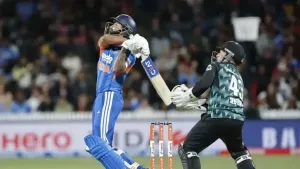
India made a world record in T20 international cricket, hit 400 sixes in a year.

Shreyas Iyer spots a chink in India’s armour after T20I triumph over New Zealand