
CricTracker
newspoint|08-02-2026
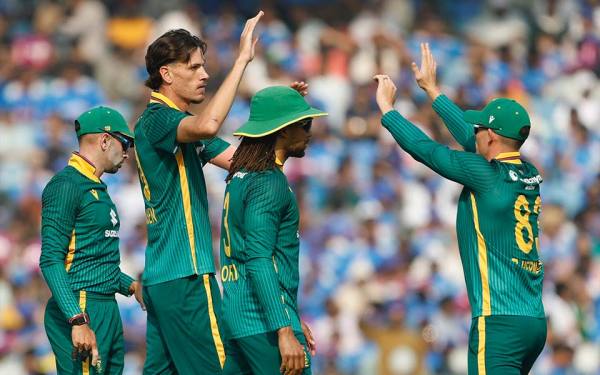 T20 World Cup 2026: SWOT analysis of South Africa- Strengths, Weakness, Opportunities, and Threats. (Photo source: Proteas Men)
South Africa enter the upcoming ICC Men’s T20 World Cup 2026 with a squad that combines explosive batting, high-quality pace bowling, and increasing familiarity with subcontinental conditions. The Proteas arrive with renewed confidence after finishing as runners-up in the previous T20 World Cup, a campaign that showcased their ability to compete deep into a global tournament while also underlining areas that still require refinement.
Despite the promise shown last time, familiar challenges remain as the South Africans look to convert potential into silverware. Their T20 World Cup campaign will begin on February 9 against Canada.
Strengths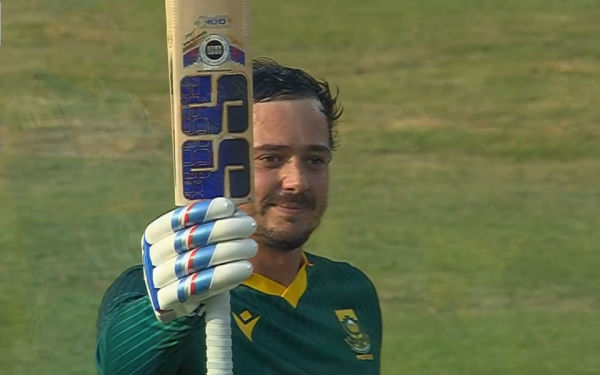 Quinton de Kock. (Photo Source: Jio Hotstar)
One of South Africa’s biggest assets is Quinton de Kock, whose record in India stands out. Across 15 T20I innings played in India, de Kock averages 47 with a strike rate over 150, numbers that underline his ability to dominate powerplays.
His experience of Indian venues, largely shaped through IPL seasons and bilateral tours, gives South Africa an attacking head start.David Miller also boasts an impressive record in Indian conditions striking over 175 with an average of 42 across 15 innings he has played. The batting group as a whole features powerful hitters who possess the ability to clear the ropes at regular intervals, which has become one of the key features of today’s T20 game.
That familiarity with Indian conditions extends across the squad.
Several South African players are IPL regulars or have toured the country multiple times, ensuring the team is not starting from scratch when it comes to adapting to pitches, boundaries and match tempo.The all-rounder depth further strengthens the side. Marco Jansen has evolved into a genuine dual threat player, deadly with the new ball in the power play and increasingly reliable as a late middle-order hitter. Alongside him, Corbin Bosch offers balance and flexibility. Bosch can accelerate when required or play a supporting role while finishing an innings, and his ability to execute yorkers and slower deliveries makes him effective at the death.
South Africa’s pace battery remains elite. A collective featuring Kagiso Rabada, Anrich Nortje, and Lungi Ngidi, supported by Jansen and Bosch, gives the team wicket-taking options across all phases. Many of these players have carried strong form from the SA20 league, adding momentum ahead of the tournament.
A key strength of the squad is the wide range of options available, allowing flexibility in team selection based on pitch and conditions.
WeaknessesSpin bowling remains South Africa’s most visible concern. Keshav Maharaj is the only frontline spinner in their squad, with Aiden Markram providing part-time off-spin. In subcontinental conditions, where spin often dictates the middle overs, this lack of depth could be exposed. In T20 internationals played in India, Maharaj’s returns have been modest, with eight wickets from nine innings at an average of 28.37 and an economy rate in excess of nine.
The absence of a wrist-spinner is particularly notable. Most successful T20 sides rely heavily on wrist spin for breakthroughs between middle overs, and South Africa’s current combination does not offer that variety, potentially allowing opposition batters to control the tempo.
In the recent series played in these conditions, South Africa’s young batters struggled to make a meaningful impact. Dewald Brevis managed just 69 runs across four innings at an average of 17 in his recent outing in India, highlighting difficulties in converting starts. Tristan Stubbs, despite his impressive IPL record and recent inclusion in the squad, also endured a lean run at the international level in Indian conditions, scoring only 46 runs in four T20I innings at an average of 11.50 and a strike rate of 112.
For South Africa to mount a strong campaign, greater returns from their emerging batters will be essential. Players like Brevis and Stubbs are expected to provide momentum through the middle overs and inject intent into the batting line-up. Their ability to adapt quickly and deliver under pressure could prove pivotal, as South Africa’s hopes of another deep run hinge significantly on their young core stepping up at the global stage.
OpportunitiesThe biggest opportunity is historical. The Proteas are still chasing their first World Cup title. After coming agonisingly close in the previous edition, this tournament presents a chance to finally cross the line, provided they handle pressure moments better than in the past.
There is also space for young talent to announce itself on the global stage. Players like Brevis and Tristan Stubbs have the skillset to change games quickly, and a strong showing at a major ICC event could firmly establish them as future pillars of South African cricket.
Threats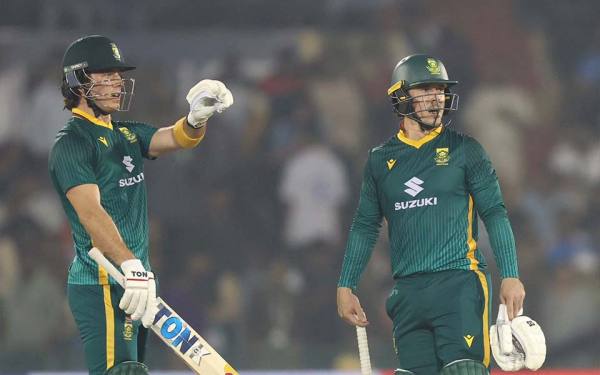 Dewald Brevis and Matthew Breetzke. (Photo source: Proteas Men)
Temperament remains the lingering question. South Africa has, at times, struggled to build or chase big totals without losing wickets in clusters during the middle overs. The recent series exposed a recurring issue for the Proteas, with batters often getting starts but lacking the ability to push on and post decisive totals. Converting strong positions into match-winning scores will be essential. With Jansen and Bosch both offering more impact with the ball than the bat, South Africa’s lower-order batting depth remains heavily dependent on their form on a given day.
South Africa’s batting often revolves around de Kock, and while his form can set the tone, such heavy reliance on a single batter could prove costly over the course of a tournament. The pace attack is undoubtedly a strength, but with several bowlers better suited to the new ball, managing the death overs could become a challenge.
South Africa’s record shows a clear contrast between strong league-stage performances and setbacks in knockout matches. In high-pressure games, where margins are fine, sharp decision-making and composure become critical. Past campaigns have shown that even minor tactical errors can prove decisive, and unless those moments are handled better, the risk of falling short at the business end remains.
South Africa squad for T20 World Cup 2026Aiden Markram (captain), Quinton De Kock, Dewald Brevis, David Miller, Jason Smith, Corbin Bosch, Marco Jansen, George Linde, Kagiso Rabada, Anrich Nortje, Lungi Ngidi, Keshav Maharaj, Kwena Mphaka, Ryan Rickelton, Tristan Stubbs



T20 World Cup: Hetmyer, Shepherd Propel West Indies To 35-run Win Over Scotland (ld)

Video of the Day: T20 World Cup 2026 - Romario Shepherd's hat-trick dismantles Scotland
RCB Ownership Bid Crosses ₹15,000 Crore Mark: Lalit Modi's Big Claim
Suryakumar Yadav fought alone… scored a half century on so many balls against USA