Sandy Verma
Tezzbuzz|29-06-2026
Tension around the 2026 ICC Women’s T20 World Cup semis shifted beyond boundaries and bats. Buried deep in the rules, a forgotten detail crawled back into view – stirring questions few expected to answer again. Instead of stats or rankings, talk turned to motives. Could profit quietly steer decisions once thought purely about fairness? While fans watched catches and wickets, another kind of match unfolded behind screens and statements.
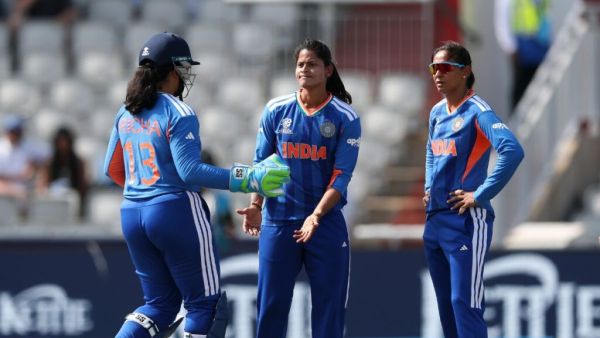
Attention returned to the debate when Kate Cross mentioned an ICC rule favoring India. Not long after, Alex Hartley added her voice, pointing out how it secures a semi-final spot if they reach knockouts. This sparked fresh discussion about fairness in the structure of competition. The moment reignited questions about balance within international cricket events.
Back at it again, their remarks stirred up an old cricket debate – how fair play mixes with money needs in world matches. What shapes the line when profit meets principle on the field? Always there, never settled.
The ICC Rule Behind the Debate
At the center of the controversy is Clause 16.10.2 of the ICC Women’s T20 World Cup playing conditions.
Picture this: the top team from Group A plays the second-place team from Group B. Meanwhile, the best of Group B takes on the next in line from Group A. These matchups shape both semi-final games. Order shifts, but the pattern holds.
Yet a single case stands out clearly.
One spot opens if India makes it past the group stage – then they land straight into the opening semi on June 30, win or just scrape through second. Lose out earlier? Then everything shifts back to the old path, where only top spots decide who faces whom next.
Back when the rules first came out ahead of the event, this clause was already there. Lately, though, attention sharpened as India moved closer to advancing past the group stage.
Cross and Hartley Call Out the ICC
Kate Cross brought it up – why give a team a spot in the semis before play begins? An odd silence followed. Then Alex Hartley chimed in, her voice low but firm. She’d won a World Cup, seen fair play matter. This setup felt off. A match hasn’t started yet, and someone still gets an advantage. The idea sat poorly with both. Moments like these stick. Unearned benefits never sit right when you’ve earned every win. Rules should wait until the field tells its story.
What stood out was how the setup seemed shaped by TV demands, not fair play. Instead of athletic fairness, it leaned on broadcast needs. A shift away from sport’s core ideas became clear through their points. Their view pointed to ratings influencing decisions more than competition did.
They added: What gives their words impact isn’t just their place in English cricket – it’s that Hartley, post-retirement, has grown into a dominant voice on air.
Still, they saw the business sense in it – Cross and Hartley admitted that much, even as they questioned the choice. Most fans tuning in from around the world come through India, making it the sport’s top audience hub. Prime-time slots across South Asia mean more eyes on screen when Indian games reach critical stages. Bigger viewership pulls higher ad payouts and strengthens broadcast earnings. Match timing shapes how much money flows into the game there.
Big figures hit hard when you run tournaments or air games live.
Favored time slots now shape how matches unfold in ICC events, especially when India plays – timing bent to pull in more eyes globally. What once felt occasional has quietly settled into routine.
Opinions split hard on that one. Still, some see it clearly while others don’t agree at all.
Some say fairness means each country gets the same shot, no matter where they’re from. When results shape who moves forward, money shouldn’t get in the way. Giving just one squad a free pass to the semis? That skews what equal chance really means. The heart of sport fades when profit picks winners before games are played. Others disagree.
Some fans back the ICC’s move, saying everyone knew the rule existed before the event kicked off. Though fixed early, it doesn’t shift who qualifies, who plays whom, or how teams reach the final stretch. Getting to the semis still depends on what happens between the ropes. India’s path hinges on actual play, nothing else.
It’s not just cricket that times big moments for prime TV slots. Other sports do too – football shifts games to fit different time zones. So does tennis. Broadcast often reaches shapes when events unfold. Money talks across many fields of play.
Still quiet on the matter, the ICC hasn’t addressed recent backlash – yet chances are this won’t fade fast. A response may come later, though silence now keeps attention fixed.
India’s money power began reshaping global cricket around twenty years ago. Growth in men’s and women’s formats shot up fast because of it. Still, doubts pop up each time rules shift in ways that seem built just for Indian viewers. That sway doesn’t fade – instead, it lingers every time a new format rolls out.
When the Women’s T20 World Cup moves into knockouts, talk drifts past just one rule about match timing.
Everyone agrees India holds the strongest financial pull in cricket now. The true discussion has moved beyond that point.
What really matters comes down to how those in charge balance making money against keeping things fair when it counts most. Somewhere along that path sits the challenge of knowing just where to stop pushing profit. It’s about timing more than rules. A shift too far one way risks trust.
Yet ignoring growth entirely feels naive. Each choice nudges the sport closer to either spectacle or purity. The moment changes shape depending on who watches. Decisions made quietly today echo loudest during finals under bright lights.




Women’s T20 World Cup 2026: Semifinal berth on the line as India faces Australia in must-win clash

ENG-W vs NZ-W Highlights, Women’s T20 World Cup 2026: New Zealand knocked out, Bates-Tahuhu-Devine retire
Tazmin Brits’ brilliant century powers South Africa to commanding win over Netherlands in Women’s T20 World Cup 2026

Sooryavanshi non-selection: Ashwin reacts; Manjrekar lauds team for ignoring ‘outside noise’