“The more things change, the more they stay the same.” French journalist and novelist Jean-Baptiste Alphonse Karr’s famous aphorism has become one of the most overused adages, almost a cliché, in sport, especially when discussing developing sporting systems.
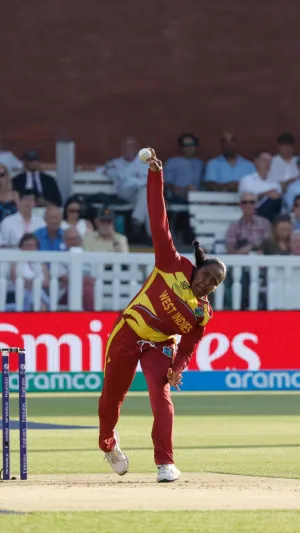
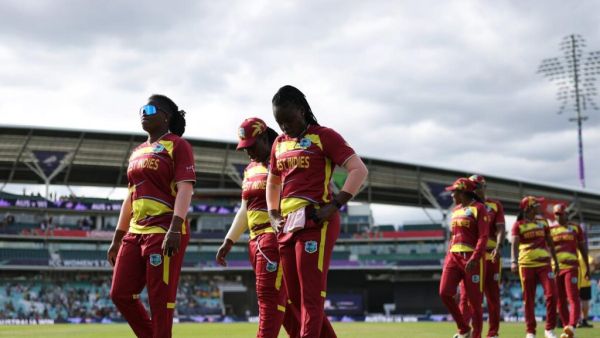
But few lines better capture the state of cricket in the Caribbean, particularly the women’s game. On Tuesday, the collective ambitions of West Indies wore the tired, dejected face of skipper Hayley Matthews after a crushing defeat to six-time world champion Australia.
Ahead of the semifinal, Matthews, a key figure in West Indies’ triumph over Australia to lift the title in 2016, had already put the David versus Goliath contest into perspective.
“Even though we have a lot of care and a lot of passion and we want to win, we’re certainly not expected to.”
And they did not.
But not without some drama.
The weight on the old guard
Moments after an emotional rendition of the national anthem, veteran all-rounder Deandra Dottin collapsed and had to be carried off by her teammates for medical attention. Reporters at the venue later said they saw her leave the medical tent at The Oval in a wheelchair.
Openers Matthews and Qiana Joseph, one of the players who had helped carry Dottin off, barely had time to process what had happened. There was an innings to build and a fight to wage before more than 10,000 spectators, many of them dressed in maroon.
A painfully cautious start soon gave way to a collapse and the familiar despair that had shadowed an otherwise disjointed campaign. Dottin returned to bat, showing everyone watching a glimpse of why she earned the moniker “World Boss” after one of the most vulnerable moments of her career. Only weeks ago, she had been left in tears after her bowling plans against Scotland failed to come off.
On Tuesday, an unbeaten 26 off 16 balls helped West Indies post a respectable but underwhelming total against an Australian side with no shortage of batting firepower. The slumped shoulders as the team walked out to defend it told their own story. The contest appeared all but conceded before it had fully unfolded. Georgia Voll’s aggressive start and Beth Mooney’s clinical anchoring only twisted the knife further.
West Indies won three and lost three of its six matches at this Women’s T20 World Cup. None of the victories came comfortably. Its talisman, Matthews, endured a frustrating campaign with the bat. So did Dottin. Both repeatedly thumped their thigh pads in exasperation after mistiming deliveries or failing to pierce the field. Meanwhile, Stafanie Taylor and Shermaine Campbelle produced valuable contributions that helped steer the side into the semifinal. But the inability to put together one complete performance, where every department clicked, ultimately proved to be its undoing.
Predictably, Matthews, Taylor and Dottin are not pleased, perhaps more with themselves than with the rest of the squad.
Beyond the stars
“I keep saying that we’ve made it to this stage of the competition despite the lack of performances of our big players. It speaks volumes about the supporting cast we have,” Matthews said, referring to players like Aaliyah Alleyne, Janiella Glasgow and Jahzara Claxton, after West Indies’ elimination.
“If you look at our T20 performances probably this year you’ll see some disappointing results we have had in the Caribbean. And yet, I don’t know what it is about this group… if it’s the passion or the drive, but I certainly feel like there is a sense of loving to prove people wrong and knowing that, yes, we have to prove ourselves over and over.”
West Indies has reached the semifinals of the last two Women’s T20 World Cups, perhaps a little more convincingly in 2024 than it did this year. Between those two tournaments, however, the side played 22 T20Is and won just eight. Some teams have played even fewer. Australia, for instance, played only 12. The difference lies elsewhere.
Australia boasts one of the strongest domestic structures in women’s cricket. The Women’s Big Bash League alone provides around 90 matches every season. For women cricketers in the Caribbean, the domestic calendar amounted to just 18 T20 matches and nine 50-over games played across a two-week window in January.
That context explains why Matthews, visibly exhausted throughout the tournament, straightened in her chair when asked:
“Hayley, does it get tiring being the player and captain that everyone looks to dig your team out of a hole?”
What followed was another reminder that while many nations occupy the same stage, not all begin the journey from the same starting line.
The need to show up
“I certainly feel like a lot of our girls come to a stage to play for West Indies and have a lot of learning to do on the job. When players emerge from the regional competition, they are not nearly as ready as they should be for international cricket. I guess that’s why players like myself, Stafanie Taylor and Deandra Dottin are so integral in helping them grow. And yes, it could be a bit tiring and a lot of pressure sometimes, but at the same time, I don’t think it’s necessarily the fault of the players coming through.
“Every single person in this dressing room tries really hard, trains really hard, and wants to learn and get better. A lot of the time, we tend to be competing against teams like Australia, who realistically, based on systems and opportunities, we’re not supposed to beat. But we still come here, and I think we show up and we put out some magical performances sometimes.
“But I do think if we want to stop seeing a dependence on players like myself, it starts from the ground up, from us having programs in place for young girls to learn to play cricket and develop from a young age and not just be the anomaly like myself or Deandra who decided to play with boys when we were 10, 11, 12 or 13, to be able to turn out the way that we are now. It’s a problem that stems from outside of us and outside of the team, and that’s why, as a player, I can’t necessarily ever be frustrated with girls within the group a lot of the time.”
Players taking on Cricket West Indies has neither been sporadic nor subtle. The board has repeatedly come under fire from its own cricketers over contracts and the lack of investment in development. In 2022, Dottin herself announced her retirement from international cricket, citing a non-conducive environment, before reversing the decision two years later.
Displeasure is one thing. Disconnection is another.
In 2024, former West Indies cricketer and member of the side that won the 2016 Women’s T20 World Cup, Brittany Cooper, underlined just how difficult it is simply to bring the squad together.
“In the Caribbean, we are a part of small islands all separated by water. Since we all play for that one board, Cricket West Indies, it is hard to come together to train,” she had told Sportstar then.
“Most of the time, our camps are held away from our home country. As a youngster when I started, cricket wasn’t known in Trinidad and Tobago. Up to this day, even after the success we saw in the 2016 World Cup, it’s still difficult for young girls to get facilities to train, and to acquire a professional coach for one-on-one coaching. It’s very hard for us in the Caribbean to just walk into a facility or have a national facility where we can just walk in and use it for our game,” she added.
The same story persists at the grassroots, and the disparity is stark across territories. At the heart of it all is money, and that, sadly, is not a problem unique to West Indies.
For Hayley Matthews, the disappointment of another World Cup campaign was inseparable from a larger reality: talent alone can no longer bridge the gap created by unequal investment and opportunities.
| Photo Credit:
Reuters
For Hayley Matthews, the disappointment of another World Cup campaign was inseparable from a larger reality: talent alone can no longer bridge the gap created by unequal investment and opportunities.
| Photo Credit:
Reuters
Money matters
“You could say it’s a Cricket West Indies problem, you could say it’s a money problem. You need a lot of money to do a lot of these things and a lot of people know within the West Indies that we don’t always have the funds required.
“A team like Australia is always going to be better off at being able to put programs in place and have pathways for young girls. If you’re struggling for money to do these things, it will show up at levels like this. It is a bit unfair sometimes.
“But that’s why you see so much pride and passion within this group because our girls have to fight a lot to even be competing and to be playing at this level,” Matthews explained.
“It’s probably easy to get into the team, but when you get to international cricket and you see the standard of it, it can be a really tall ladder to climb to be performing at the standard that you need to.”
This is not to suggest that progress has stood still. High-performance camps in Antigua have expanded to include more age groups. Cricket West Indies also sent a group of promising youngsters to train at the Super Kings Academy in Chennai. Regional contracts have emerged to support players, many of whom previously balanced cricket with work or education. The Women’s Caribbean Premier League is another encouraging step, although little has been done to broaden its reach or popularity.
Yet, in the ICC’s market-driven revenue-sharing model, West Indies remains at a structural disadvantage.
“When shares are a lot different for different teams, it makes it really hard for us to compete when we don’t have pathway programs in place. Teams like Australia have the greatest pathway system where they’re pushing out Phoebe Litchfields from 15 years of age every single year.
“I am hopeful of the future and hope the gap doesn’t widen more. I think the reason that we were so successful back in 2012-2016 is because women’s cricket was based on pure talent at that time. The minute investment comes into the picture, the gap had widened.
“I don’t know what the answer is, or what direction we go. That’s probably not even my job, so I’m not going to worry my head about that too much. But I guess I will sit here and be honest about how it feels.”
Matthews managed 145 runs in six innings at an average of 24.17, modest returns for an opening batter and one of the side’s few genuine match-winners. With the ball, however, she was exceptional, taking 10 wickets in six innings, the third most in the tournament at the time. It still wasn’t enough.
The frustration was visible throughout the campaign, in every grimace and every grunt after another missed opportunity. Yet, even amid the disappointment, Matthews made a conscious effort to focus on what still lay ahead.
“I still want to play for West Indies. It is one of the harder jobs, but I feel like West Indies has given me the chance to be myself and play a lot of franchise cricket. I personally feel I’ve had a real opportunity to make a difference.
“I’ve seen so many young girls in the Caribbean already probably want to play cricket or take up cricket because of me, and knowing that I have that power and that influence in a country and in a region where women’s cricket and women’s sports on a whole probably isn’t represented massively, is huge.”
The Women’s T20 World Cup 2026 has already marked the retirements of three New Zealand greats in Lea Tahuhu, Sophie Devine and Suzie Bates. After every heavy defeat, an inevitable question lingers around the West Indies camp: has another member of its golden generation reached the end?
Matthews insists she has heard no such conversations.
“I haven’t necessarily heard any of them talking about retirement yet, thankfully, but I think there’s still a lot of passion from them to play. A healthy team environment is important for them. The fresh faces in this team will drive them to feel like they can play a massive role. Hopefully that combination of the young and new can help players understand that their role is so much bigger than just going out to bat or bowl.”
On most days, for West Indies, destiny can feel as though it has been wrested from its grasp long before the first ball is bowled. Yet, despite the setbacks, despite the structural disadvantages and despite the hurt, these dreamers continue to do the one thing they have never stopped doing.
They dream.
Published on Jul 01, 2026