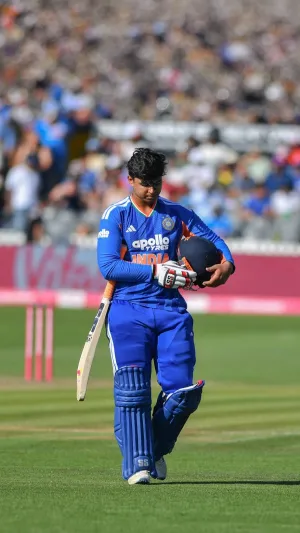
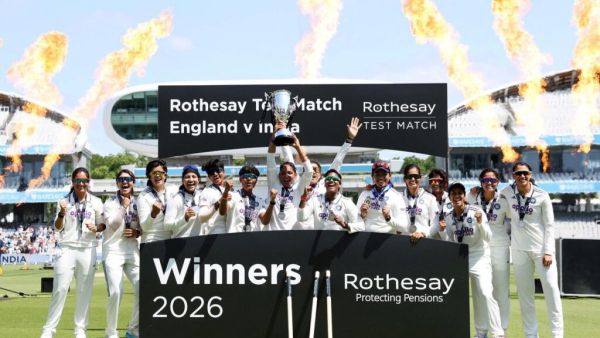
Many have entered cricket’s most hallowed ground through the Heyhoe Flint Gate over the past four years. However, that gate assumed even greater significance than it had earlier this month.
Though the MCC paid tribute to Rachel Heyhoe Flint, one of the pioneers of women’s cricket, by renaming the Eastern Gate after her, Lord’s had never hosted a Women’s Test match. The wait of 239 years was finally over for the women in white.
You could see it on the faces of the 50-odd former England women cricketers who were given the honour of ringing the five-minute bell. You could also see it on the faces of the female cricket fans who queued up outside Lord’s well before the first ball of the first Women’s Test was bowled.
And Lord’s was ready for the momentous occasion, the historic Test between England and India. It was scheduled to get underway just five days after the final of the Women’s T20 World Cup.
The Englishwomen had played that final against Australia and were soundly beaten. They had just a few days to recover and prepare for the completely different demands of Test cricket, a format unfamiliar to many of the younger players. Meanwhile, a defeat to Australia in its final group match had already ended India’s hopes of reaching the semifinals. That meant Harmanpreet Kaur’s women could take a breather and focus on Test cricket. It seemed they were better off because of that. India outplayed England in every aspect of the game.
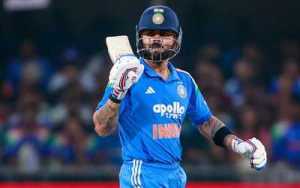
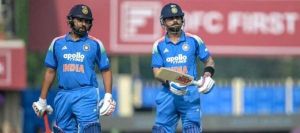
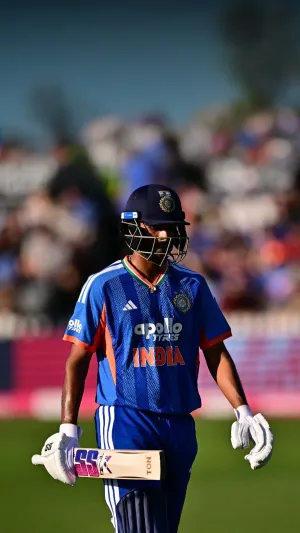
Working in tandem: Smriti Mandhana laid the foundation with a fluent 80 in the first innings before Yastika Bhatia’s superb century tightened India’s grip on the historic Women’s Test at Lord’s.
| Photo Credit:
AFP
Working in tandem: Smriti Mandhana laid the foundation with a fluent 80 in the first innings before Yastika Bhatia’s superb century tightened India’s grip on the historic Women’s Test at Lord’s.
| Photo Credit:
AFP
After being put into bat, India made 285 in the first innings, riding on fifties from Smriti Mandhana, Harmanpreet and Deepti Sharma. The Indian batters punished the undisciplined England attack.
That total seemed even bigger than it actually was, thanks to a superb spell of pace bowling from Kranti Gaud. She bowled with good pace and got her line and length right. She attacked the stumps relentlessly and was rewarded with a five-wicket haul. She has come a long way in a short time and promises a lot more.
Kranti was well supported by the other Indian bowlers. Amy Jones was the only England batter who looked comfortable. But for her counterattacking 52 off 62 balls, the host would have been in even deeper trouble.
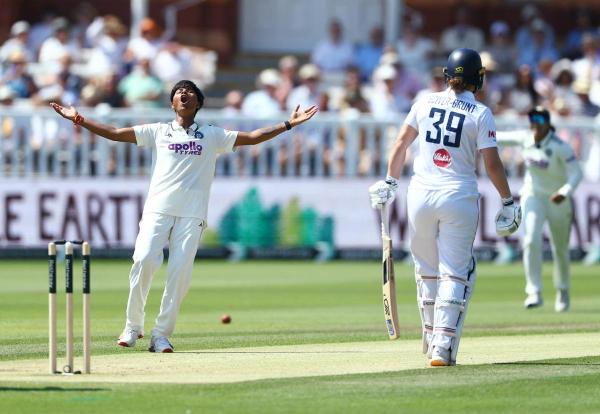
Historic haul: Kranti Gaud became the first woman to earn a place on the Lord’s Test honours board, her incisive spell of 5 for 37 exposing England’s batting with relentless accuracy.
| Photo Credit:
Reuters
Historic haul: Kranti Gaud became the first woman to earn a place on the Lord’s Test honours board, her incisive spell of 5 for 37 exposing England’s batting with relentless accuracy.
| Photo Credit:
Reuters
Because of those five wickets, Kranti became the first woman to make it to the Lord’s honours boards for Tests. Before long, she was joined by her teammate Yastika Bhatia, who made a brilliant hundred to help India move into a commanding position. She thoroughly deserved to become the first female batter to make it to the board.
Yastika’s performance was all the more remarkable because she was returning from an ACL injury that had kept her out of the ODI World Cup. She also kept wickets throughout the match. Richa Ghosh, who gave up the gloves, took a stunning reflex catch in the second innings.
Richa shone with the bat, too. She hit a quickfire unbeaten 50 to help India declare in the second session on the third day. Sophie Ecclestone gave England something to cheer about as she picked up five wickets and earned the right to have her name on the honours board.
India’s declaration left England to negotiate a long, difficult final session against a sharp Indian attack riding high on confidence.
Kranti impressed yet again. Her new-ball partner, Sayali Satghare, also bowled well as they removed both England openers inside the first three overs.
Kranti had accounted for Tammy Beaumont, who fell for a golden duck in her final Test innings. Beaumont had announced her retirement from international cricket a couple of days earlier and broke down during the ensuing press conference, but recovered quickly enough to crack jokes.
Then, midway through the match, Heather Knight also announced that she would not play for England again. She had led England to the ODI World Cup title in 2017 at the same venue. Lord’s is her favourite ground. She could at least take solace in returning to Lord’s as general manager of the London Spirit franchise.
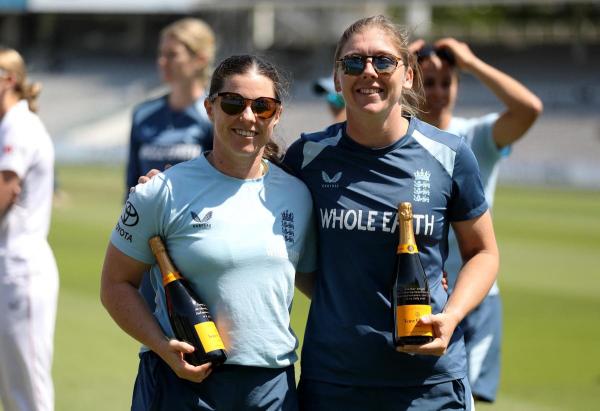
Calling it a day: A landmark Test also became a farewell. Tammy Beaumont and Heather Knight ended their international journeys at Lord’s after years of defining England’s success across formats.
| Photo Credit:
Reuters
Calling it a day: A landmark Test also became a farewell. Tammy Beaumont and Heather Knight ended their international journeys at Lord’s after years of defining England’s success across formats.
| Photo Credit:
Reuters
England may not find it easy to replace Beaumont and Knight, who, between them, scored more than 15,000 runs for England. Their careers also spanned the game’s remarkable transformation, allowing them to witness and benefit from its growing stature.
The MCC, which had resisted women’s membership for so long, threw its weight behind promoting the Women’s Test. There was an attractive campaign centred around Knight.
“The first Women’s Test at Lord’s was a major priority for MCC, and we invested significantly in marketing the occasion to attract a broad and diverse audience while celebrating this historic moment for the game,” MCC’s Chief Marketing Officer Katie Maier told Sports stars. “The response has been phenomenal, exceeding sales expectations since launch and helping to deliver a new world-record attendance for a Women’s Test match. Heather’s retirement at the conclusion of the Test has added even greater poignancy to the occasion, marking such a special and significant moment in her remarkable career.”
Knight, however, could not produce the rescue act she had performed for England on so many occasions in the past. She was out for 13 in her final Test innings.
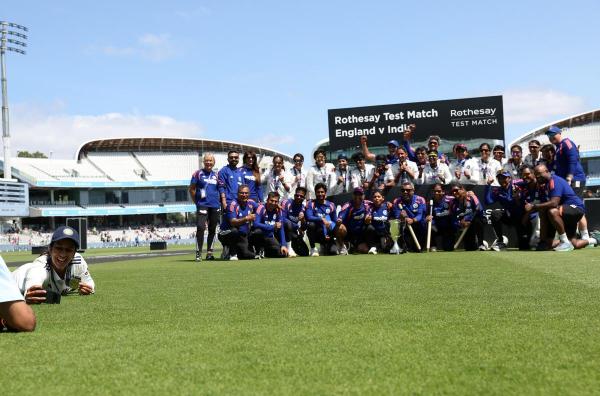
Jubilation: Jemimah Rodrigues takes her customary winning selfie with the team. India has now won four of its last five women’s Tests, while England has lost four of its last five.
| Photo Credit:
Reuters
Jubilation: Jemimah Rodrigues takes her customary winning selfie with the team. India has now won four of its last five women’s Tests, while England has lost four of its last five.
| Photo Credit:
Reuters
Jones scored another fifty and Ecclestone registered her maiden one, too. But that only helped England delay the inevitable, and not by much. England was bowled out in the first session of the final day.
Sneh Rana did most of the damage with the ball, claiming four wickets. Fittingly, she took the last wicket too, clean bowling Ecclestone.
The Test may have been one-sided, but there were several fascinating moments over the course of the match. It was another reminder that women deserved more Tests.
Published on Jul 14, 2026