
Ashutosh Kumar Thakur
abplive|20-07-2026
"Quality without results is pointless. Results without quality are boring." Johan Cruyff once said. There comes a moment in every great sporting career when victory no longer settles the argument. Instead, it creates an entirely new one.
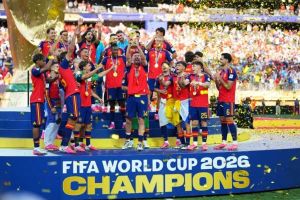
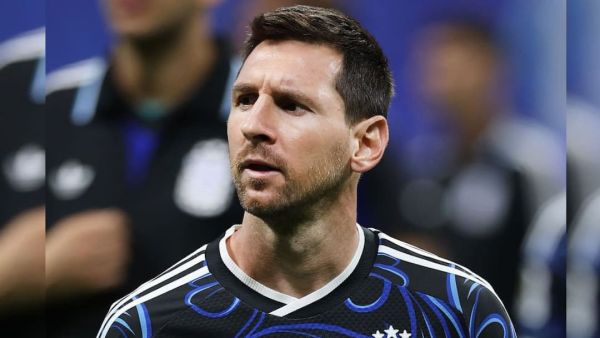
Lionel Messi had barely lifted another FIFA World Cup trophy before the conversation shifted. Television studios stopped analysing his passes. Newspapers stopped counting his assists. The celebrations in Buenos Aires had scarcely ended when the inevitable question emerged.
Should This Be Lionel Messi's Last World Cup?
Football has always struggled to know when its greatest artists should leave the stage. Pelé faced the question after Mexico in 1970. Franz Beckenbauer encountered it after Argentina in 1978. Diego Maradona resisted it long after his body had begun to betray him. Zinedine Zidane delayed retirement to lead France one last time in Germany before his career ended in unforgettable controversy. Every generation asks the same question in a different language.
Now it belongs to Messi.
The temptation after another triumph is to imagine the perfect farewell. Athletes, however, rarely experience perfection in the same way as spectators. Supporters want endings that resemble cinema. Players live inside routines. Training begins again on Monday. Recovery starts the following morning. Another season waits.
Retirement is never merely an emotional decision. It is a negotiation between the body, the mind and the appetite to continue competing.
That is why the question surrounding Messi deserves more thought than immediate sentiment.
The Footballer Messi Has Become
The most remarkable transformation in Lionel Messi's career has not been statistical. It has been philosophical.
The young Messi overwhelmed defenders through acceleration. He collected the ball near the halfway line and left entire defensive lines chasing shadows. Barcelona's great teams were built around movement, and Messi was its fastest expression.
The older Messi plays an altogether different game.
He walks more than almost anyone else on the pitch. Critics occasionally mistake that for decline. It is, in reality, conservation. Every slow step is an act of calculation. Every pause is an invitation for defenders to relax before he exposes the space they have unknowingly abandoned.
Football has always rewarded intelligence as generously as athleticism.
Arrigo Sacchi once observed that football is played with the head and that the feet are merely instruments. Few contemporary players embody that truth more completely than Messi. He now dictates rhythm rather than speed. He controls geometry rather than territory. He influences matches through anticipation instead of relentless running.
The World Cup final offered another illustration of that evolution.
He was no longer required to dominate every attack. Instead, he became the calm centre around which Argentina's younger generation organised itself. There were moments when Enzo Fernández carried the midfield with extraordinary maturity, when Alexis Mac Allister connected defence and attack with understated elegance, and when Julián Álvarez stretched Spain's disciplined defensive line through tireless movement.
Messi remained the reference point, but no longer the entire system.
That, perhaps, is Lionel Scaloni's greatest achievement.
He has built an Argentina that no longer depends entirely on its greatest player. Instead, it allows its greatest player to become even greater.
A Final Worthy Of Two Champions
History often remembers World Cup finals through the team that lifts the trophy. That is understandable, but it is rarely complete.
Spain deserve to be remembered with equal respect.
Their commitment to possession never became an obsession. Their pressing remained courageous until the closing stages. Even when the match threatened to drift away, they refused to abandon the principles that have defined Spanish football for nearly two decades. Finals acquire greatness because defeated teams refuse to surrender. Spain ensured that this was never a ceremonial procession towards another Argentine celebration. They forced the champions to earn every moment.
Every champion, however, also needs a goalkeeper capable of altering history. Argentina have found precisely that figure in Emiliano Martínez.
Goalkeepers occupy a peculiar place in football. For ninety minutes they remain almost invisible. Then, within a fraction of a second, they become the most important player on the field.
Martínez has developed an extraordinary habit of producing those defining interventions. His late save in this final belonged to a distinguished tradition that includes Gordon Banks denying Pelé in Guadalajara in 1970, Iker Casillas stretching out his right boot to stop Arjen Robben in Johannesburg in 2010 and Martínez's own astonishing save from Randal Kolo Muani in Doha four years ago.
Great goalkeepers do more than prevent goals. They preserve destinies.
Argentina's defenders now play with a confidence that comes from knowing the final line of resistance is among the finest goalkeepers in world football. Championships are often remembered through goalscorers. They are frequently secured by goalkeepers.
Messi may have lifted the trophy, but Martínez ensured that Argentina remained in a position to do so.
Can Messi Play One More?
Every World Cup eventually asks the same question of its greatest player.
Not whether he can still play. Whether he should.
Four years, in football, is both an eternity and an instant. Bodies age. Muscles recover more slowly. The calendar becomes less forgiving. Yet modern football has also changed our understanding of longevity. Better nutrition, sports science, recovery techniques and carefully managed club schedules have extended careers that would once have ended much earlier.
Roger Milla arrived at the 1994 World Cup at the age of forty-two and still scored for Cameroon. Lothar Matthäus played his fifth World Cup at thirty-nine. Miroslav Klose waited until Brazil in 2014 to become the tournament's all-time leading scorer before retiring as a world champion. More recently, Luka Modrić has continued to dictate matches well into his late thirties, proving that intelligence can often compensate for declining pace.
Messi belongs to that fraternity.
He no longer plays football through relentless acceleration. He plays it through anticipation. His game demands fewer explosive sprints than it once did because he reaches the right spaces before everyone else. Watching Messi today is rather like watching a grandmaster in chess. The moves appear simple only because they have been imagined several moments earlier.
That evolution matters.
If this were the Messi of 2014, whose game depended upon repeated bursts of speed, another World Cup might appear unrealistic. The Messi of today expends his energy with extraordinary discipline. He chooses his moments. He understands his body perhaps better than any footballer of his generation.
From a purely physical perspective, another World Cup is no longer an impossible dream. Whether it is desirable is an altogether different question.
Beyond Records, Beyond Numbers
There was a time when every tournament carried another statistical milestone for Messi.
Another Ballon d'Or. Another Champions League record. Another international goal. Another comparison with Diego Maradona. Those debates have largely ended.
The World Cup in Qatar settled the only argument that truly mattered in the public imagination. Everything that has followed has been an extension rather than a correction of his legacy.
That is precisely why another World Cup should not be viewed as a quest for records.
Messi has nothing left to prove. If he chooses to continue, it should be because football still gives him joy.
There is a quiet freedom in reaching that stage of a sporting life. The pressure that accompanies greatness gradually disappears because greatness has already been established. Every appearance becomes a gift rather than an obligation.
Pelé understood that after Mexico in 1970. Miroslav Klose understood it after Brazil in 2014. One suspects Messi understands it now.
The Decision That Belongs To One Man
Football supporters often believe they possess a moral claim over the careers of their heroes. They do not.
Every retirement produces competing emotions. Supporters want one more season. Coaches want one more tournament. Sponsors want one more campaign. Television networks want one more farewell. Only the player understands the invisible cost of continuing.
Training sessions become longer than matches. Recovery occupies more hours than competition. Family begins demanding the time that football once consumed without question.
No journalist, no supporter and certainly no television debate can calculate those private negotiations. Only Messi can.
Lionel Scaloni has repeatedly resisted placing public pressure on his captain. That restraint reflects wisdom rather than uncertainty. Argentina have evolved into a team capable of winning with Messi, not merely because of Messi. Young players such as Enzo Fernández, Julián Álvarez, Alexis Mac Allister and Cristian Romero have matured into leaders in their own right. That allows Argentina something rare in international football.
They can afford patience. If Messi returns, he will enrich an already exceptional team. If he does not, he will leave behind one of the healthiest footballing cultures Argentina has produced in decades. That, too, is part of his legacy.
The Privilege Of Choosing The Ending
Perhaps we have been asking the wrong question. The question is not whether Lionel Messi should play another World Cup.
The question is whether football has finally learned to allow its greatest players the privilege of deciding their own farewell.
For two decades the game has revolved around Messi. Generations have measured footballing excellence against his left foot, his vision and his astonishing consistency. Few athletes in any sport have remained at the summit for so long while continuously reinventing themselves.
If he walks onto another World Cup pitch four years from now, the world will celebrate because football remains richer in his presence.
If he decides that this final was enough, the game will lose remarkably little of his greatness, because greatness has never depended upon one final appearance.
Pelé did not become Pelé because of one tournament. Maradona did not become Maradona because of one goal. Messi will not become less Messi because he chooses not to chase another summer.
Some footballers collect trophies. A very small number reshape the language through which football is understood. Lionel Messi belongs to that rarer company.
Whether he returns for one more World Cup is ultimately his decision. What football owes him is something far simpler. The patience to let him make it.

“If There’s No Noise” Rohit Sharma Hits Back at Critics With Confident Stance
Ruturaj Gaikwad to lead West Zone in Duleep Trophy 2026
3 players who should be dropped from India's ODI squad
‘Wickets were not offering that much to the spinners’: Shubman Gill defends not playing Kuldeep Yadav