

Shivam Sharma
abplive|07-08-2026
Ajinkya Rahane opened up about one of the most demanding phases of his professional career: spending two full years on the sidelines as India's 12th man before finally receiving his Test debut.
Although Rahane made his international debut in limited-overs cricket in 2011, he was made to wait 20 Test matches before earning his maiden red-ball cap against Australia in 2013.
Speaking on his Hindi YouTube channel, Rahane revealed how he shifted his perspective during those long months on the bench instead of allowing frustration to take over:
"The first two years, when I entered the team for the first time in 2011.
I had to wait 20 games for my Test debut, and I was there as a 12th man for two years. That was a challenging phase, but I learnt a lot from it. I had two choices: either to gain sympathy or try to improve myself. There is nothing bad about being a 12th man or serving water or helping your teammates. I took it positively. I would look at everything, and because of that, I could play for a long time. Observing helped my attitude and mindset. It would be easy to gain sympathy, but I never expected that," he said on his Hindi YouTube channel.Rather than viewing bench duties as a setback, Rahane embraced the role of assisting his teammates - whether carrying drinks or fielding - and used the vantage point to observe international match play closely.
Addressing how he built mental resilience, Rahane credited his upbringing in Mumbai and guidance from senior players for teaching him self-control:
"It was there from before, but it also developed as I kept playing and gained experience. I will not say I had so much patience right from the start. When you travel in a local train in Mumbai, it is challenging. So somewhere, patience develops right from there.
When I started domestic cricket and kept scoring consistently, you unknowingly think that your name should come for India. And even I thought the same. But after talking to some senior players and over time, I realised it will happen when it has to happen. You do whatever is in your control. If you want to play for long, patience is important," he added. When I started domestic cricket and kept scoring consistently, you unknowingly think that your name should come for India. And even I thought the same. But after talking to some senior players and over time, I realised it will happen when it has to happen. You do whatever is in your control. If you want to play for long, patience is important," he added.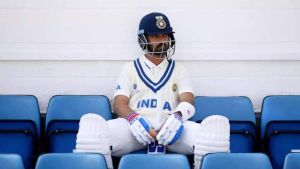



South African Cricketer Accused Of Killing Girlfriend Returns To Court This Week

It is very humbling: Mitchell Starc on potentially passing Kapil Dev’s Test wickets tally

Jos Buttler’s Bold Prediction: Vaibhav Sooryavanshi Will Rewrite T20 History

MI London Crush Sunrisers by Seven Wickets at The Oval