
Sandy Verma
Tezzbuzz|16-08-2026
On August 15, 2026, Indian cricket will witness a monumental achievement that few could have imagined possible.
When Shubman Gill leads his team out for the first Test against Sri Lanka at Galle, it will be India's 600th Test match. And in doing so, it will make India only the third country in the world (along with Australia and England) to play 600 Tests. More significantly, it will also be played on India's 80th Independence Day.
For Gill, it would be a fitting debut as he leads India into this special Test. “Leading the side in the 600th Test is an honor and doing so on Independence Day is an even bigger honour,” said the India captain.
However, 600 Tests is far more than just a number. A number that encapsulates more than nine decades of elation and agony, of legendary players and legendary matches, of achievements and disappointments, that have defined Indian cricket.
As India prepares for the 600th Test, here are five wins that stood out for turning the odds on their head
Port of Spain, 1976: The chase nobody thought was possible
In 1976, India went to the West Indies, where they faced one of the strongest teams in the world. The target that the Indians had set for themselves was 403.
At that time, only one team had chased down and beaten a score of over 400 in a Test match, and that was the famous Australian team of 1948, who chased down England's 404.
Even the legendary opener of India, Sunil Gavaskar, did not think that they had a chance to win.
Gavaskar even wrote in his autobiography Sunny Days that he was positive that they could save the game, but the thought of winning “never entered my mind”.India needed 269 runs to chase down West Indies' score on the final day. However, right then, the impossible began to look possible.
Gavaskar scored a magnificent 102 while Gundappa Viswanath remained not out at 112 as the Indian batting lineup refused to lie down. They made one of the most famous Test match chases in the early years of India's Test history.
India reached the target with six wickets in hand.The headline in the Trinidad Express read “India defies history, whip West Indies”. It was more than just a win. It was a statement that India could dream and achieve big things.
Kolkata, 2001: When India turned a follow-on into a miracle
Twenty-five years later, India delivered another Test win that seemed to exist in between sporting brilliance and myth. Australia had arrived in Kolkata as the world's best team, having just recorded sixteen consecutive Test wins, and another victory was expected when Steve Waugh and his men arrived in Kolkata in 2001.
India's first innings had offered little resistance as Australia posted a mammoth 445 before India was bowled out for 171, giving Australia a lead of 274.
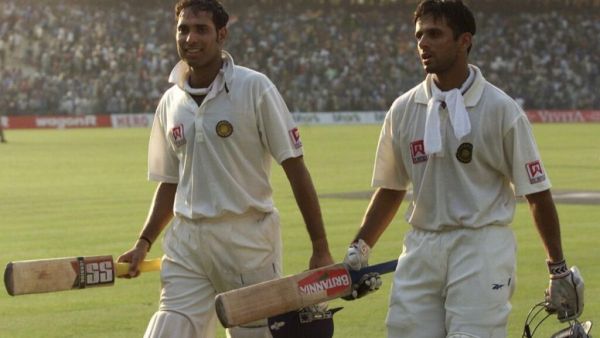
However, the game changed dramatically as VVS Laxman and Rahul Dravid, at numbers three and four respectively, refused to give in to the pressure exerted by the Australian bowlers. The two put on a historic 376 for the third wicket as the chase gathered momentum before India declared themselves done at 657/7.
All of a sudden, it was Australia that was in trouble as Harbhajan Singh, who had already taken a hat-trick in the match, wrapped up the tail on the final day to give India a 171-run win.
It remains one of the most famous comebacks in Test history as the team that had to follow-on somehow found a way to turn a near-invincibility Australian performance on its head.
The sight of Laxman and Dravid walking off together has since been etched in Indian history as a symbol of hope and perseverance.
Adelaide, 2003: Dravid takes center stage
It was in Adelaide, Australia, in 2003, that India made history for the second time.
Ricky Ponting's Australia had posted 556 in the opening innings, putting India in a hole yet again. Once again, Dravid and Laxman stood tall as Dravid made one of the best Test innings of his life, scoring 233.
Together with 148 by Laxman, the two put on 303 for the third wicket as India chased down 523 for the second time in the series. However, it was Ajit Agarkar who delivered when India needed him most as he took six Australian wickets for 41 runs to bowl them out for 196, giving India a target of 230 to win.
Dravid anchored the Indian chase yet again before he was finally out for an unbeaten 72. India made the most of it as they reached the target with four wickets in hand to record a famous win.
While Kolkata had shown that India was capable of making a comeback win, Adelaide demonstrated that the team was able to win on its own terms.
Brisbane, 2021: The Gabba fortress falls
Some wins live on in history for the numbers on the scoreboard. Some go down as legendary for the circumstances under which they happened.
India's 2021 win in Brisbane falls somewhere in the second category.
The visitors had arrived in Brisbane with a depleted squad as Kohli had already left the tour, while Jasprit Bumrah, Ravichandran Ashwin, Ravindra Jadeja, Mohammed Shami, Hanuma Vihari and Umesh Yadav were all unavailable.
Meanwhile, Australia had not lost a Test match at the Gabba in 32 years, so the odds were stacked against India. However, it did not matter as India made history.
After Australia posted 369 in the opening innings, India made a valiant effort to save the match, with Shardul Thakur and debutant Washington Sundar seeing the team post 336. Mohammed Siraj then took charge of the attack as he bowled five Australian wickets to restrict them to 294, giving India a target of 328 to win.
India had a depleted attack to face the fearsome Australian pace battery of Mitchell Starc, Pat Cummins, Josh Hazlewood and Nathan Lyon. It should have been a losing cause, but Shubman Gill got the chase off to a flyer with 91 while Rishabh Pant made a match-defining unbeaten 89.
Washington Sundar added 22 crucial runs before India made it to the finish with three wickets in hand. The Gabba fortress was breached as India posted a famous win in Brisbane.
More importantly, the win completed a 2-1 series win over Australia, putting an end to their 32-year unbeaten streak at the Gabba. It remains one of the most famous wins in Indian history for a generation of fans.
Lord's, 2021: Kohli's India not to be drawn in
Later that year, India registered another famous away victory, this time at Lord's. The match looked set to end in a draw.
India had made 364 in their first innings, a fabulous century from KL Rahul, and a stunning reply from England of 391, with an unbeaten 180 from Joe Root. India made 298/8 declared, with Mohammed Shami and Jasprit Bumrah putting on a stand of more than 50 that turned out to be the catalyst for an entire turnaround in the match.
England had a little under two seasons to survive. A draw looked likely, but Virat Kohli had other ideas.
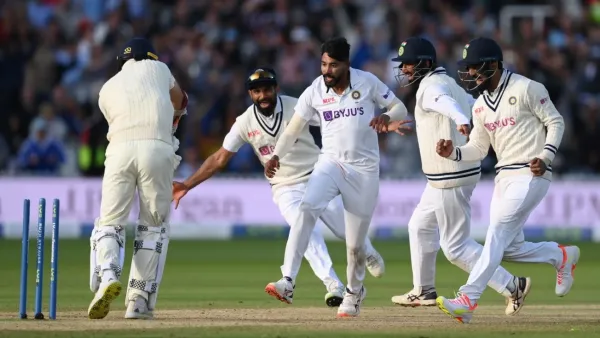
He told his players to make sure that for the last 60 overs, England would feel the pressure. India's quick men responded in kind, with Mohammed Siraj bagging four wickets, Bumrah three, Ishant Sharma two and Shami one. England were all out in 51.5 overs, India winning by 151 runs.
It was not just the bowling that was special, though. It was the intent, the willingness to go out and win the game and the chance to make history.
India could have drawn at Lord's, but Kohli's men went out and attacked—600 Tests and another famous victory to follow. From Port of Spain to Kolkata, Adelaide to Brisbane and Lord's, India's biggest Test wins have been when the odds were stacked against them. They have been about belief, and that the 600th Test is a big deal.
India's rise from minnows to a side that can beat anyone on their own soil is a special story, and one that has played out over decades. The players may have changed, the game may have changed, but the desire to win big games has not.
Gill will be looking to make his own mark in the 600th Test, which coincides with Independence Day, as India take on Sri Lanka in the WTC. It is a momentous occasion, but Indian Test matches have a history of being special.
Maybe another famous victory is in the offing, this time in Galle?


Getting back on track: The slow but steady progress of Kumar Kushagra
Rishabh Pant ruled out of first two India A vs New Zealand A unofficial Tests
Yuvraj Singh shares funny reaction to Sourav Ganguly's proposal at Delhi Capitals
3 Franchises that must target Keemo Paul in IPL 2027 auction