Samira Vishwas
Tezzbuzz|17-08-2026
Delhi: Today there are many rules in cricket regarding the length, width and thickness of the bat, but do you know that there was a time when there was no fixed limit regarding the width of the bat? In the early days of cricket, the ball was rolled underarm and a bat, almost like a hockey stick, was used to play the ball rolling on the ground. Around 1760, bowlers began pitching the ball instead of rolling it. Bats like hockey sticks became less effective as the ball bounced off the pitch and reached the batsman. After this, the shape of the bat gradually started changing and instead of curved bats, bats with straight and long blades started being used.
However, this new straight bat had a loophole that went unnoticed at the time. In 1771, during a match between Chertsey and Hambledon in England, a batsman named Thomas White took to the field carrying a very wide bat. His bat was so wide that it was covering almost the entire wicket. At that time there was no specific limit in the rules regarding the width of the bat, so technically his bat was not against the rules. The opposition team protested against this and after this incident, in 1774, the maximum width of the bat was fixed at 4.25 inches i.e. about 10.8 centimeters. After this, as the bowling speed increased, there were continuous changes in the bat also. Flexible handles separate from the blade were developed in the 19th century to reduce the impact and vibration of fast balls. Later rubber based handles helped in absorbing shock and improving control of the bat.
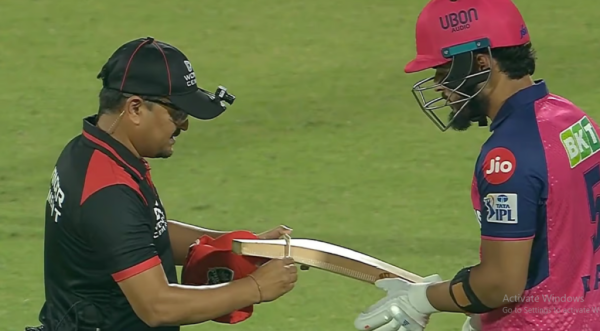
Over time, the part of the bat where the ball was most likely to hit began to be made stronger and thicker. This made it possible to control the weight of the bat while keeping it strong. For many centuries, the width of the bat was controlled by rules, but there was relatively more freedom regarding its thickness and edges. In the modern era, the edge and thickness of the bat started increasing, after which in 2017 the MCC controlled the size of the bat more strictly. Under the rules, the maximum width was set at 10.8 cm, maximum depth at 6.7 cm and maximum edge at 4.0 cm. The maximum length of the bat is 96.52 centimetres, although this length limit existed before 2017. Umpires have a bat gauge to check all these set limits. Only the bat which is within the prescribed parameters is considered valid for use in cricket. Thus, the story of the cricket bat is not just the story of the development of a tool, but also the story of the rules made to keep the game balanced and fair.



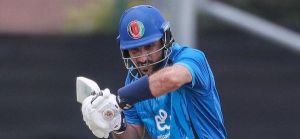
Rahmat Shah, Atal power Afghanistan to 4-0 ODI Series Sweep Over Ireland
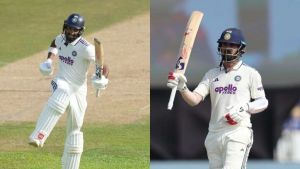
Devdutt Padikkal's century thundered India, first day's play ended at 288/2, Rahul retired hurt.

Indian cricket legends extend wishes on occasion of the 80th Independence Day

ICC Eyes Gandhi Jayanti for 2027 World Cup Opening Day